Blog
Pet Drying Cabinet vs. Pet Dryer: Which Is Better for Drying Dogs and Cats?

Pet Drying Cabinet vs. Pet Dryer: Which Is Better for Drying Dogs and Cats?
Bathing a dog or cat is only half the job. Drying is often the more challenging part, especially for pets with thick or long coats.
Today, pet owners and professional groomers can choose from several drying solutions, including handheld pet dryers, high-velocity dog dryers, pet drying boxes, and enclosed pet drying cabinets.
But which option is right for your pet?
In this guide, we'll compare a pet drying cabinet with traditional pet dryers and explain what you should consider when choosing a pet drying solution.
What Is a Pet Dryer?
A traditional pet dryer uses a stream of air to remove moisture from a pet's coat.
Handheld dryers are common in pet grooming salons because the groomer can direct the airflow to specific areas of the animal's body.
They can be useful for:
· Removing excess water after bathing
· Drying specific areas
· Grooming pets with different coat types
· Professional grooming applications
However, handheld dryers usually require someone to operate the device throughout the drying process.
For pets that need longer drying times, this can require considerable attention from the groomer or owner.
What Is a Pet Drying Cabinet?
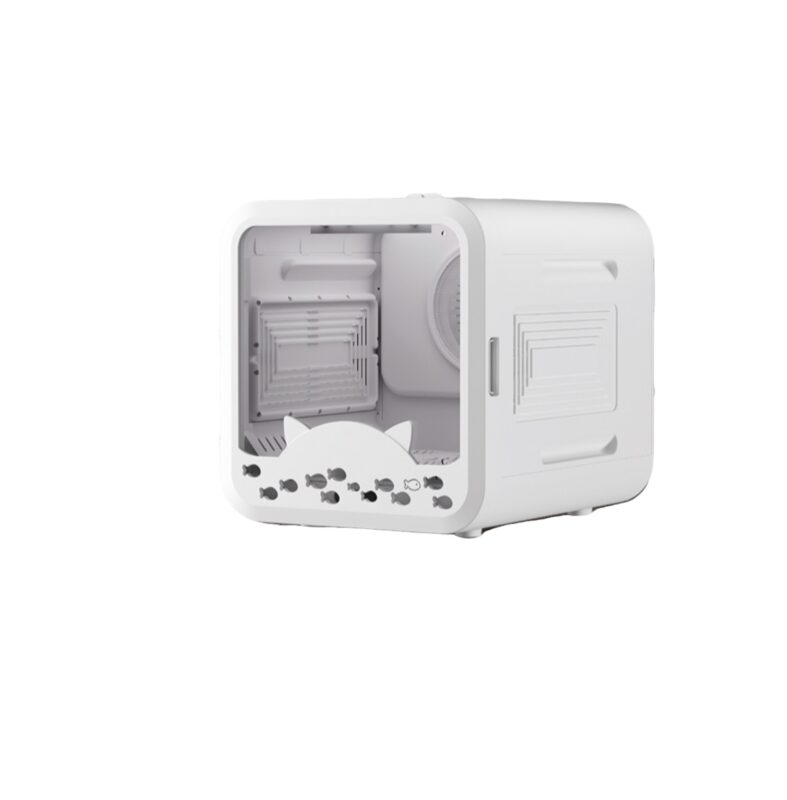
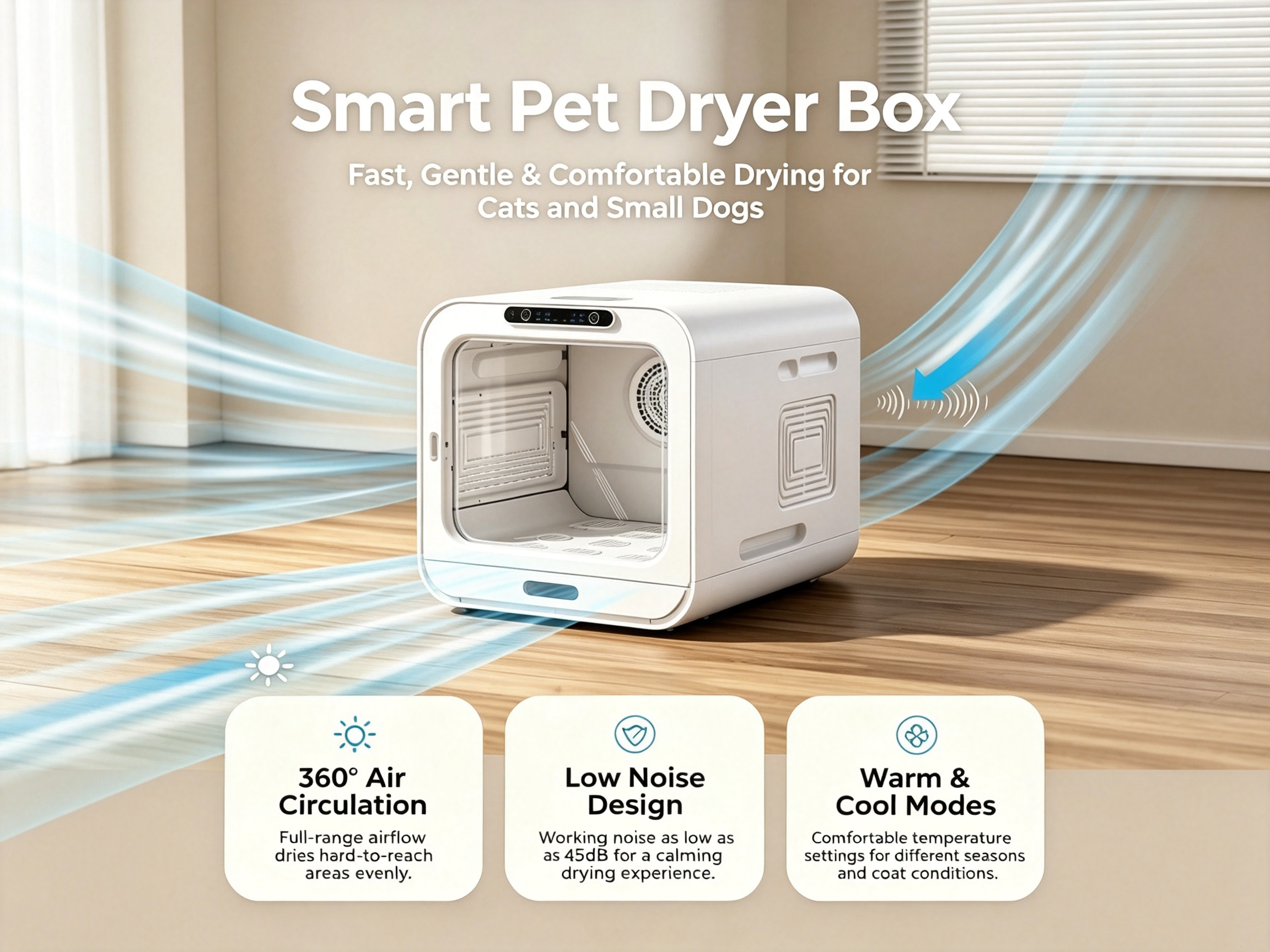
A pet drying cabinet is an enclosed drying system designed to circulate controlled airflow around a pet.
Instead of manually directing a dryer toward the animal, the pet is placed inside the drying cabinet while temperature, airflow, and drying time can be adjusted according to the pet's needs.
This makes a pet drying cabinet particularly useful for routine drying after bathing.
Depending on the model, features may include:
· Adjustable temperature
· Multiple airflow levels
· Timer settings
· Low-noise operation
· Air circulation
· Hair collection
· Easy-clean components
Pet Drying Cabinet vs. Handheld Pet Dryer
Feature | Pet Drying Cabinet | Handheld Pet Dryer |
Drying method | Controlled enclosed airflow | Direct airflow |
Hands-free operation | Yes | No |
Temperature control | Usually adjustable | Depends on model |
Airflow adjustment | Usually available | Usually available |
Drying consistency | More uniform | Depends on operator |
Professional grooming | Suitable | Suitable |
Home use | Convenient | Convenient |
Neither solution is automatically better for every situation.
The right choice depends on your pet, drying routine, available space, and whether you are a pet owner or professional groomer.
Why Choose a Pet Drying Cabinet?
One major advantage of a pet drying cabinet is convenience.
After bathing, you can place the pet inside the cabinet and select an appropriate temperature, airflow level, and timer setting.
For example, a modern pet drying cabinet may offer adjustable temperatures from 20–45°C, multiple wind-speed settings, and timer control.
A low-noise design can also make the drying environment more comfortable for pets that are sensitive to loud sounds.
What About Noise?
Noise is an important consideration when choosing a pet dryer.
Some traditional high-velocity dryers can produce significant airflow noise. Certain dogs and cats may become nervous or uncomfortable when exposed to loud equipment.
A low-noise pet drying cabinet can provide a more controlled environment.
For example, Lucky Pet Global's pet drying cabinet is designed to operate at approximately 40–45 dB, depending on the model and operating conditions.
Which Option Is Better for Grooming Salons?
Professional grooming salons often use multiple drying methods.
A handheld or high-velocity pet dryer can be useful for removing large amounts of water quickly, while a pet drying cabinet can be used for controlled finishing and routine drying.
Using different drying solutions allows groomers to choose the most appropriate method for different pets and coat types.
Which Is Better for Home Pet Owners?
For pet owners, convenience is often a major consideration.
A pet drying box or drying cabinet can be particularly attractive for households that regularly bathe their dogs or cats.
Instead of holding a dryer continuously, owners can use an enclosed drying system with adjustable settings.
However, pets should always be monitored during drying and the manufacturer's instructions should be followed.
What Should You Look for in a Pet Drying Cabinet?
When comparing models, consider:
Temperature Control
Look for adjustable temperature settings rather than a single fixed temperature.
Airflow Adjustment
Different pets and coat types may require different airflow levels.
Timer
A timer allows you to set a controlled drying period.
Noise Level
Lower operating noise can be beneficial for pets that are sensitive to sound.
Easy Cleaning
Hair collection and easy-to-clean components are especially important for homes and professional grooming businesses.
Voltage Compatibility
For international users and distributors, a wider voltage range can be useful.
A model supporting 110–240V can be suitable for different markets, subject to the applicable local electrical requirements.
Both traditional pet dryers and pet drying cabinets have their place in pet grooming.
A handheld pet dryer offers flexibility and direct airflow, while a pet drying cabinet provides a more controlled and convenient drying environment.
For pet owners, grooming salons, pet spas, and other professional applications, a well-designed pet drying cabinet can be a valuable addition to a pet care routine.
When choosing a model, look beyond the basic drying function and consider temperature control, airflow, noise level, timer settings, cleaning convenience, safety, and market-specific electrical requirements.